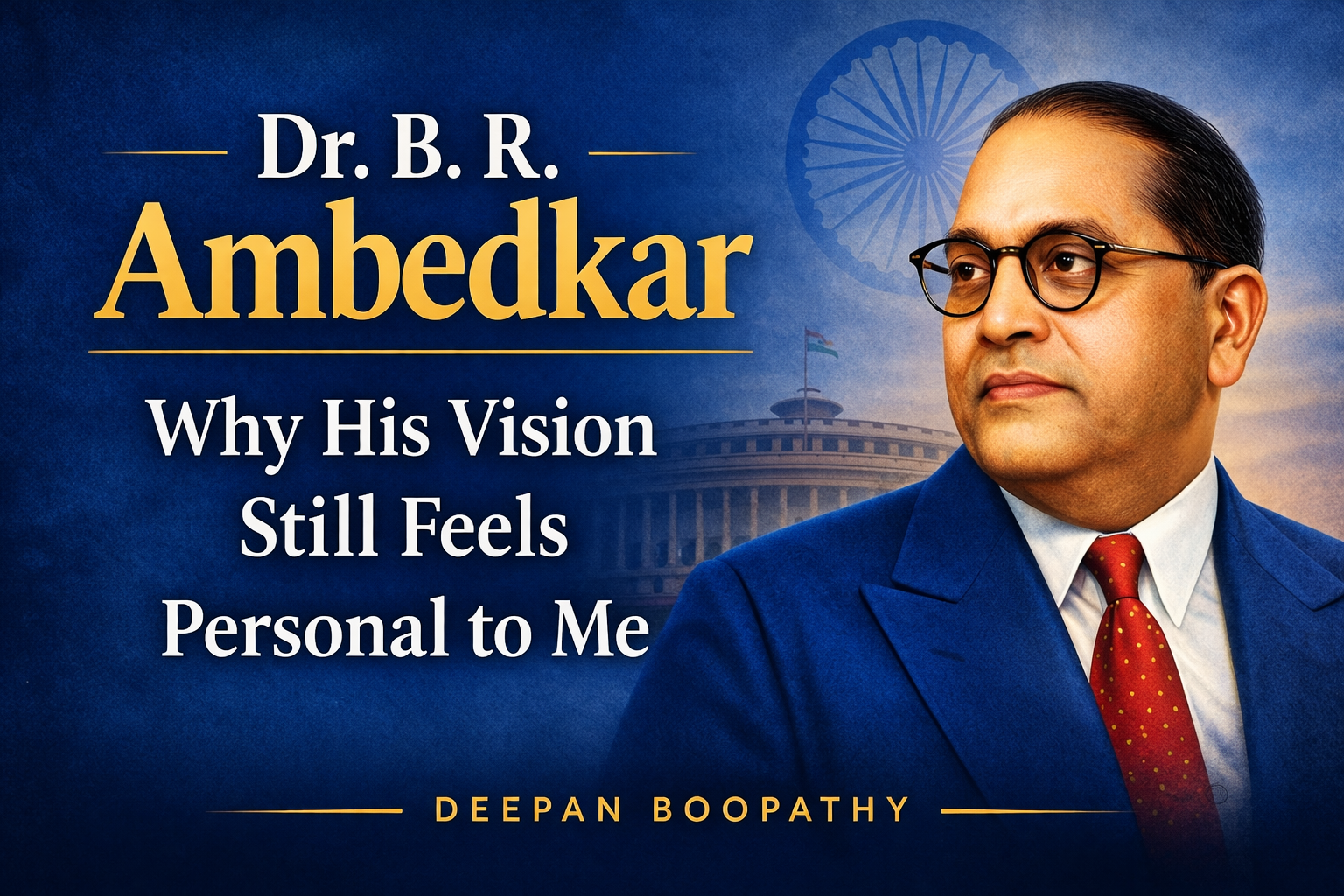
Dr. B. R. Ambedkar: Why His Vision Still Feels Personal to Me
Every year on April 14, we remember B. R. Ambedkar as the architect of the Indian Constitution, a reformer, a scholar, and a revolutionary thinker. But for me, Dr. Ambedkar avargal is not just a historical figure. He is a constant reminder of what it means to question, to rise, and to build a society that is truly fair.
Growing up in India, you hear his name often—in textbooks, speeches, and public celebrations. But understanding him is a completely different journey. The more I read about him, the more I realize that Dr. Ambedkar avargal was not just fighting for rights; he was fighting for dignity. And dignity is something that still feels unfinished in our society.
Beyond the Constitution
We often reduce Dr. Ambedkar avargal to “the man who wrote the Constitution.” But his vision went far beyond law and governance. He wanted a society rooted in equality, where your birth does not decide your worth.
He believed that education is liberation, and that idea resonates deeply with me. In today’s world, we talk about opportunities, startups, and success—but how many of us stop to think about whether everyone truly has a fair starting point?
Dr. Ambedkar avargal didn’t just ask for reform—he demanded transformation.
Why His Ideas Still Matter
Even today, inequality exists in subtle and not-so-subtle forms. It may not always look like what it did a century ago, but it hasn’t disappeared.
Sometimes it shows up in access to education.
Sometimes in social attitudes.
Sometimes in silence.
Dr. Ambedkar avargal’s voice still asks us uncomfortable questions:
Are we really equal?
Do we treat everyone with dignity?
Are we willing to challenge injustice when we see it?
And if I’m honest, the answer is not always “yes.”
Shared Ideals: Ambedkar and Periyar
As I reflect more, I also find myself thinking of Periyar E. V. Ramasamy avargal.
Periyar avargal, like Dr. Ambedkar avargal, questioned deeply rooted social structures. Both believed that self-respect is non-negotiable. Both challenged systems that people had accepted for generations.
What I find powerful is how both leaders, in their own ways, told people:
Don’t accept injustice just because it is old.
Periyar avargal spoke in the language of rebellion.
Dr. Ambedkar avargal spoke in the language of law and rights.
But both were fighting the same battle.
As someone reflecting on their ideas today, I feel a sense of responsibility—not just to admire them, but to live their values in everyday life.
A Personal Reflection
For me, Dr. Ambedkar avargal’s life is not just inspiring—it is grounding.
It reminds me that:
Knowledge is power, but only if used for others
Progress is meaningless if it excludes people
True success is not individual, it is collective
In a fast-moving world where we chase personal goals, Dr. Ambedkar avargal brings me back to a simple question:
What kind of society am I helping build?
Carrying the Vision Forward
Remembering Dr. Ambedkar avargal should not be a ritual—it should be a renewal.
A renewal of questioning injustice, valuing education, respecting every individual, and standing up—even when it’s uncomfortable.
Because his dream was not just about India then—it is about India now, and India tomorrow.
— Deepan Boopathy
Follow me on Twitter: @deepanboopathy
Read more: deepanboopathy.com